How to Create a Memorial Page for a Catholic Funeral
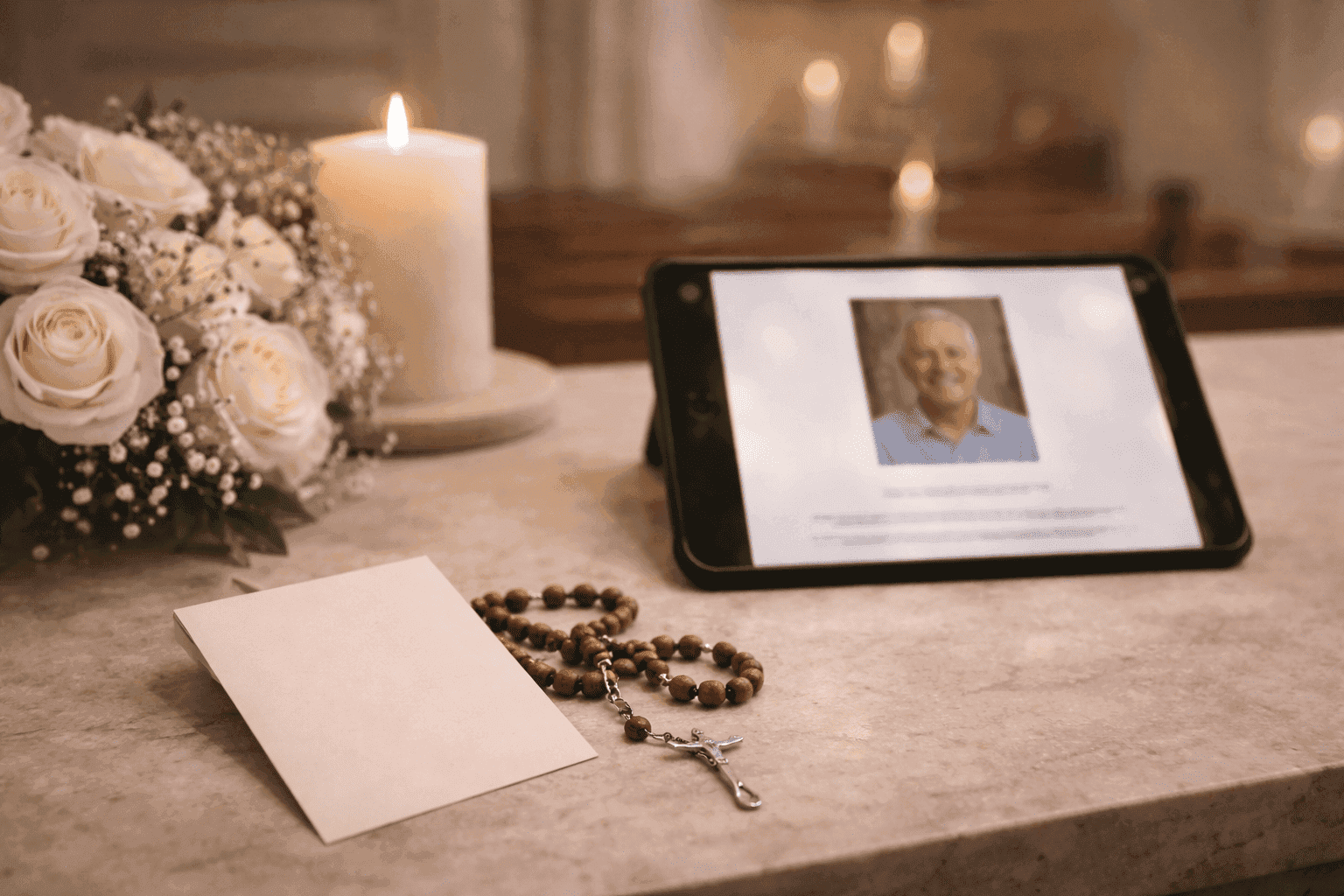
Catholic funerals rarely fit into a single day. There's the wake, the rosary, the funeral Mass, the burial — and in many parishes, a reception afterward that feels just as important to the family. Coordinating all of that across relatives scattered in different cities used to mean dozens of phone calls and hopes that nobody missed the details.
A memorial page solves that. It gives everyone one place to find service information, remember the person, and stay connected — before and after the funeral.
A Catholic memorial page works best when it carries all service details in one place: the Mass time, the parish name, the burial location, and any prayer requests from the family. Set it up before the funeral so visitors can find information easily, and update it afterward to keep it as a lasting tribute.
What to Include on a Catholic Memorial Page
A Catholic memorial page often includes:
- the person's full name
- birth and passing dates
- one or more photos
- a short biography or tribute
- funeral Mass details (parish name, date, time)
- wake or visitation details
- rosary or vigil information
- burial location
- reception details
- a prayer, scripture, or short faith note if the family wants it
- donation information for a parish or Catholic charity
You don't need to include every detail. The goal is to make the page useful and respectful.
What to Write in the Biography
The biography doesn't need to read like a résumé. A few sentences about who the person was — their faith, their family, their parish life, their character — will do more than a formal summary.
Consider including:
- how long they were a member of their parish
- the role faith played in their daily life
- a specific memory or quality the family wants people to know
- organizations, ministries, or causes they supported
A few genuine lines often land better than a longer formal statement. If you need help getting started, this guide on what to write on a memorial page has specific prompts.
Keep the Tone Warm and Reverent
Catholic memorial pages feel strongest when the tone is calm rather than promotional. Avoid overly decorative language or generic phrases. Let the person's real story carry the page.
A calm tone is especially important if the page will be visible to parish members or elderly relatives who may be unfamiliar with online memorials. Simple, direct language makes the page feel accessible.
Share Mass and Prayer Details Clearly
If the page is being used before the funeral, make service information easy to find at the top.
That may include:
- parish name and address
- date and time of the funeral Mass
- rosary or vigil details
- burial location
- reception details
If memorial Masses will be offered later, update the page with those details when they are scheduled. A memorial page can serve that function for months or years after the original service.
Consider Adding a Prayer Card QR Link
Many Catholic families still keep prayer cards for years. A memorial QR code pairs naturally with that tradition.
You can place the QR code:
- on a prayer card
- in the funeral program
- on a memory table at the reception
- near a framed photo at the vigil or rosary
That lets relatives scan and revisit the memorial page anytime. If you want practical printing advice, read how to share a memorial QR code at the gravesite.
Should the Memorial Be Public or Private?
It depends on the family.
Public often works well when:
- the parish community is large
- many people will want access
- the memorial will be shared in a printed program
Private can be better when:
- the family wants a more intimate page
- the page includes details not meant for broad circulation
- emotions are especially tender and the family wants a smaller space
If you're deciding between those two options, this privacy guide can help.
If You Want to Include a Memorial Donation
Some Catholic families choose to include:
- a parish donation link
- a religious charity
- a hospice donation
- a community ministry the person cared about
Keep the wording brief and specific. Visitors should understand immediately what the donation supports and where it goes.
Updating the Page After the Service
The memorial page doesn't have to disappear after the funeral. Many families update it with:
- thank-you notes to the parish and friends who came
- photos from the reception or graveside
- details about future memorial Masses
- a reflection or prayer added weeks later
That keeps the page alive as a place to revisit — not just a one-time logistics tool.
Frequently Asked Questions
Can I include a rosary prayer or scripture verse on the page?
Yes. Many Catholic memorial pages include a short prayer, a favorite scripture, or a verse from the Mass for the Dead. Keep it brief — one passage or prayer is usually enough. It sets the tone without overwhelming the tribute section.
Should the page be public or private for a Catholic funeral?
It depends on the size of your parish community and how widely you're sharing service details. If you're printing the memorial link in the funeral program, a public page makes access easy. If the family wants more control over who sees the page, a private link that you share directly is a better fit.
Can I use the page to announce future memorial Masses?
Yes. One of the best uses of a memorial page after the funeral is to announce any memorial Masses offered in the weeks or months ahead. Update the page and share the link with family and parish friends who may want to attend.
How long should a Catholic memorial page stay active?
As long as the family wants. Some families keep the page active for the first year, particularly around anniversaries and feast days. Others keep it permanently as a lasting tribute. There's no required timeline.
Can I add a donation link to a parish or Catholic charity?
Yes. Many families include a donation link to the person's parish, a Catholic hospice, or a charitable ministry they supported. Keep the note short and specific — one sentence explaining what it supports is usually enough.
If you want a starting point, QuickMemorial's create flow is designed to keep the process simple for faith-based memorials. You can also see how a memorial page for a Catholic funeral comes together as a template.
QuickMemorial
Written by the QuickMemorial editorial team. We cover grief, memorials, and end-of-life planning to help families navigate loss with care. Learn about us.
Related Articles
How to Create a Memorial Page for a Jewish Funeral or Shiva
A practical guide to creating a memorial page for a Jewish funeral or shiva, including what information to include, how to share shiva details, and how to keep the page respectful and useful.
Grave Marker vs. Headstone: What's the Difference and Which to Choose
A grave marker and a headstone both mark a burial site, but they differ in size, style, cost, and cemetery rules — this guide explains each option clearly.
Memorial Service vs. Funeral: Key Differences Explained (2026)
Memorial service vs. funeral: one involves the body, the other doesn't. This guide covers timing, cost, and how to choose the right format for your family.