What to Write on a Memorial Page: Simple Examples and a Fill-In Template
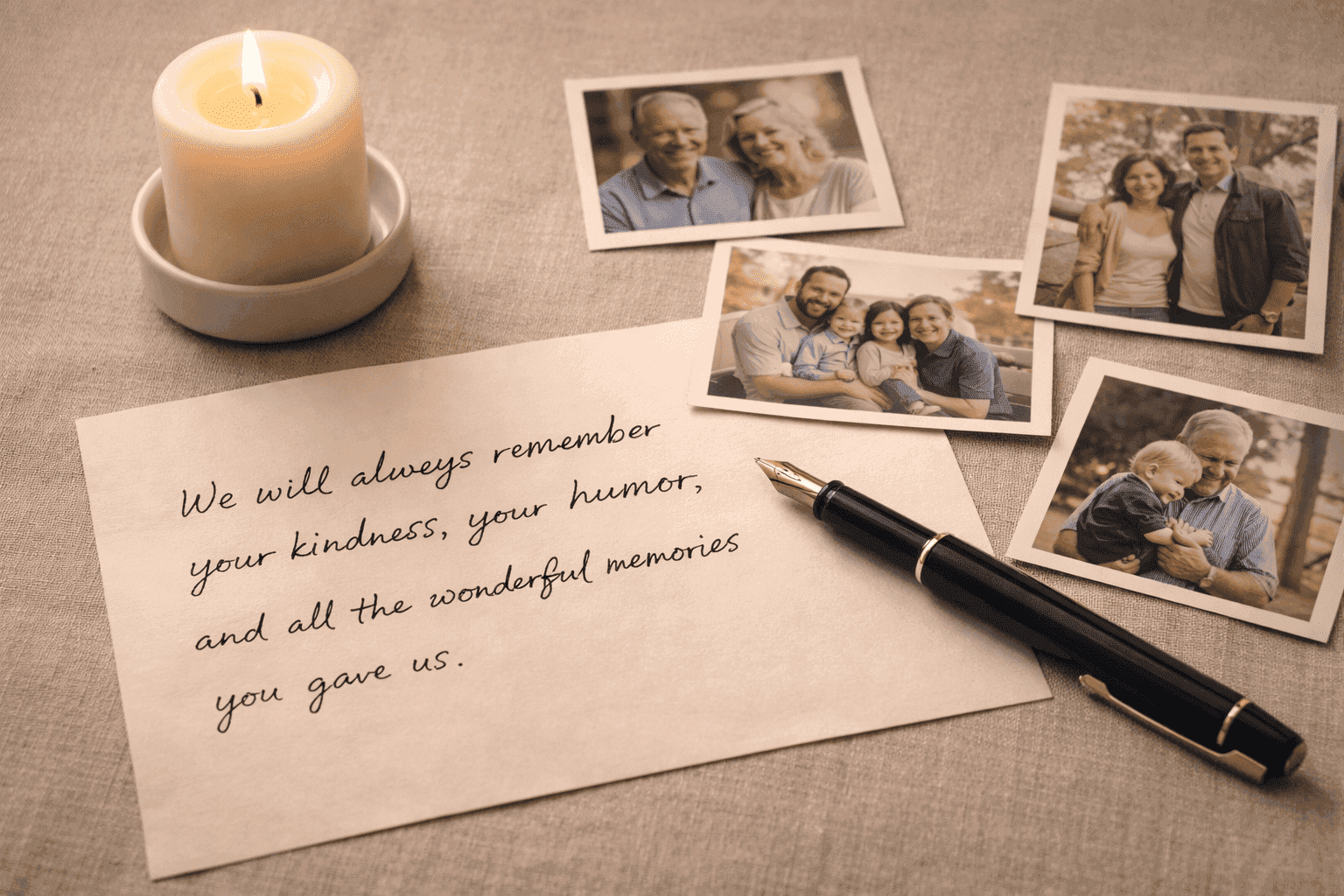
Knowing what to write on a memorial page can be harder than choosing the photos.
You may know exactly how much the person meant to you, but turning that into words is another thing entirely. Most families are not trying to write a perfect eulogy. They just want to say something honest and loving.
That is enough.
For most pages, three to five sentences covers it: who they were, what they loved, and how they made people feel. Start with one specific detail — a habit, a phrase, the way they treated people — and build from there. You can always add more later.
What a Memorial Page Tribute Should Do
The best memorial page writing usually does three things:
- names the person clearly
- gives visitors a feel for who they were
- leaves the family with something worth returning to
A memorial page is not exactly the same as an obituary. It can be more personal, less formal, and more focused on memory than announcement.
A Simple Structure That Works
If you are stuck, use this format:
- Say who they were
- Mention what people loved about them
- Name the qualities or memories that stay with you
Example:
Michael was a devoted father, loyal friend, and generous neighbor. He loved fishing trips, loud family dinners, and any excuse to make people laugh. He will be remembered for his patience, his humor, and the way he made others feel welcome.
That is already enough for a strong memorial page.
A Fill-In Template
You can also use this template and adjust it to sound more like your family:
[Name] was a beloved [relationship or role] who touched the lives of many people. They were known for [quality], [quality], and [quality]. They loved [hobby, place, tradition, or family ritual]. We will remember them for [specific memory or lasting impact], and we are grateful for the love they gave throughout their life.
What to Include
Most good memorial pages include some version of these details:
- family roles such as mother, uncle, partner, teacher, or friend
- personality traits people instantly recognize
- hobbies, passions, routines, or traditions
- a favorite saying, habit, or story
- the way they cared for others
The most memorable lines are usually specific.
Instead of:
She was kind and loving.
Try:
She was the kind of person who remembered every birthday and always sent people home with leftovers.
That one detail makes the tribute feel real.
If You Want to Keep It Short
A short memorial page can still be moving.
Here is a shorter example:
Daniel was deeply loved by his family and friends. He brought calm, humor, and generosity wherever he went. We will miss him terribly and remember him always.
Short does not mean cold. Short can feel gentle and readable, especially when grief is fresh.
If You Want to Write Something Longer
Longer memorial pages often work best when they move through a few simple sections:
- early life
- family and relationships
- work, service, or passions
- what people will remember most
You do not need to cover every year of their life. Focus on the things that tell visitors who they were.
What to Avoid
Try not to:
- make it sound like a resume
- copy an obituary word for word if it feels too formal
- force the tone to be overly polished
- use vague phrases without any personal details
The goal is not to impress people. The goal is to help them remember.
Writing for Different Relationships
The right tone shifts depending on how you knew the person.
For a parent: Focus on what they modeled for you, not a list of accomplishments. "She taught us to show up for people, no matter what" carries more weight than any credential.
For a spouse or partner: Write about the specific life you shared — the places you went, the routines, the things only the two of you understood. That specificity is what makes it feel true.
For a sibling: Siblings share a history no one else does. Write the version only you could write — the way they teased you, what they were like when no one else was watching.
For a friend: Friendship tributes often undersell how much the relationship mattered. Name it plainly. "She was my closest friend for thirty years" is enough of an opening.
For a grandparent: Grandparents often left behind something harder to name — the feeling of being completely known. Write about the time they gave you, the food they made, the stories they told. Sensory details land the hardest.
Pair the Writing With the Right Photos
The tribute becomes stronger when the words and photos support each other.
If you write about their garden, include a garden photo. If you mention their military service, include a service photo. If you describe their role in the family, add a family photo.
This guide on what photos to include on a memorial page can help you choose the best mix.
If Visitors Will Leave Messages Too
Many families like pairing the main tribute with guestbook messages from relatives and friends.
That works especially well when the page opens with a short biography and then gives others space to add their own memories. If you want examples for visitors, here are 50 meaningful memorial guestbook messages.
Frequently Asked Questions
How long should a memorial page tribute be?
Three to five sentences is enough to feel personal and meaningful. A short paragraph works for most pages. Save the longer piece for the eulogy — a memorial page is a tribute, not a biography.
What if I don't know what to say?
Start with one specific memory or trait. "She always had coffee ready before anyone else was awake" is worth more than three vague paragraphs. If you're completely stuck, use the fill-in template above and change the words until it sounds like your family.
Can the tribute be written in first person?
Yes. Writing as "I" or "we" can feel more personal than writing about them in third person. Do what sounds most natural to you — there's no wrong format.
Should I include cause of death on a memorial page?
Most families don't, and you're not required to. The page is about their life, not how they died. If you'd like to mention it briefly for context, keep it to one sentence.
Can I update the tribute later?
Yes. With QuickMemorial, you can edit the biography and other details anytime you have the manage link. Many families start with a short draft during funeral planning and add more once they have space to breathe.
Final Thought
If you are wondering what to write on a memorial page, the answer is usually this: write what you would want someone to know about them if they had never met them.
Not every detail. Not every achievement. Just the truth of who they were.
If you want a place to publish that tribute, QuickMemorial lets you create a memorial page in minutes and update it later through the manage link. It is free to start, with no account required.
QuickMemorial
Written by the QuickMemorial editorial team. We cover grief, memorials, and end-of-life planning to help families navigate loss with care. Learn about us.
Related Articles
What to Say at a Graveside Service: Words, Readings, and Examples
Graveside service wording for openings, committal words, prayers, poems, and secular readings. Includes examples a funeral director or family member can use directly.
Celebration of Life Speech Examples: What to Say and How to Say It
Not sure what to say at a celebration of life? Ready-to-use speech examples for every speaker -- opening words, tributes, toasts, and closing remarks, by relationship and situation.
Condolence Messages: Short and Heartfelt Messages for Every Situation
Ready-to-use condolence messages for texts, social media, and quick emails -- organized by relationship and type of loss, with guidance on what to say and what to avoid.