Online Memorial vs Obituary: Key Differences and When You Need Both
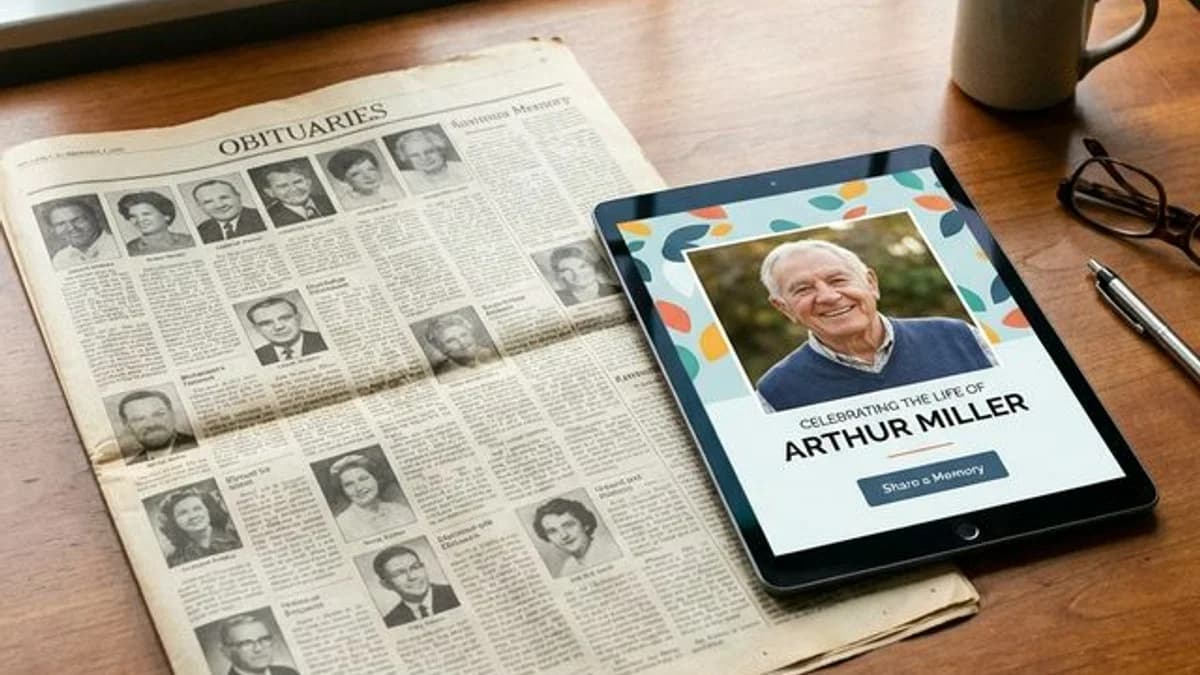
Most families face this decision within the first 48 hours: someone mentions the obituary, someone else asks about a memorial page, and suddenly you're comparing two things that actually serve very different purposes.
An obituary announces the death and shares service details. An online memorial preserves photos, stories, and tributes in one place that people can revisit for years. Many families use both — the obituary as a public notice, the memorial page as the lasting tribute. You don't have to choose one or the other.
Quick Comparison
| Aspect | Obituary | Online Memorial |
|---|---|---|
| Main purpose | Announce the death | Preserve the person's life and memory |
| Best for | Community updates, service details | Photos, stories, tributes, sharing |
| Typical length | Short and factual | Flexible and much more detailed |
| Interaction | Mostly none | Candles, messages, ongoing sharing |
| How long it lasts | Days, weeks, or archived listings | A permanent link people can revisit |
| Cost | Often expensive in newspapers | Free to start, paid plans from $9 |
What Is an Obituary?
An obituary is a public notice that tells people someone has died. It usually includes:
- the person's full name, age, and date of death
- key biographical details
- surviving family members
- funeral or memorial service information
- donation or flower instructions
Its job is clarity. People read obituaries when they need the facts quickly.
If you are writing one now, our step-by-step obituary guide walks through the format in detail.
What Is an Online Memorial?
An online memorial is a dedicated place to remember someone's life. Instead of fitting everything into a short notice, it gives family and friends space for:
- multiple photos from different stages of life
- a longer biography or tribute
- visitor messages and virtual candles
- a link you can share by text, email, or social media
- a QR code for the funeral program or gravesite on paid plans
If you want a simple starting point, this free memorial page guide explains what families can create before paying anything. For a full comparison of free online memorials and what each platform offers, see our guide to creating a free online memorial.
Key Differences That Matter to Families
1. Purpose
An obituary answers: "What happened, and when is the service?"
An online memorial answers: "Who was this person, and how can we keep remembering them?"
2. Timing
Obituaries are usually written quickly in the first few days after a death.
Memorial pages can be created immediately, after the funeral, or even years later. There is no deadline on remembrance.
3. Participation
Obituaries are mostly read once.
Memorial pages give people something to do. They can read stories, look through photos, light a candle, and leave a message for the family.
4. Depth
Obituaries are often limited by space, cost, or publication rules. An online memorial gives you room for the personal details that do not fit neatly into a short notice.
5. Longevity
Newspaper obituaries are temporary. Funeral-home listings may eventually be buried in archives.
A memorial page gives you one lasting link you can keep sharing on anniversaries, birthdays, and other important dates.
6. Cost
| Option | Typical Cost |
|---|---|
| Newspaper obituary | $200-$1,500+ |
| Funeral-home listing | Often included with services |
| Online obituary platform | Varies |
| QuickMemorial Remember | Free to start |
| QuickMemorial paid plans | $9-$49 one time |
Which One Should Families Use?
Choose an obituary first if:
- you need to announce the death quickly
- people need funeral or service details right away
- you want a formal public notice for the local community
Choose an online memorial first if:
- you want a lasting page for photos and stories
- family and friends are spread out and need one shareable link
- you want a place for messages, candles, or donation links
Use both if:
- you want a short public announcement now and a fuller tribute later
- you want to place the memorial link or QR code inside the obituary
- you want the service details in one place and the long-term remembrance in another
For many families, using both is the best fit.
Example: How They Work Together
A short obituary might say:
A memorial page celebrating Joanne's life, with photos, service updates, and a place to share memories, is available at [link].
That one sentence turns the obituary into a bridge. People get the practical announcement first, then click through to the fuller tribute.
Can You Create an Online Memorial Without a Newspaper Obituary?
Yes. Many families skip the newspaper obituary entirely and share a memorial page by text, email, and social media instead.
That approach is often faster, more affordable, and easier to update if plans change.
Frequently Asked Questions
Is an online memorial the same as an obituary?
No. An obituary is mainly an announcement. An online memorial is a longer, more personal tribute.
Can I add the memorial page to the obituary?
Yes. Many families include the memorial URL or QR code in the obituary so readers can visit the full tribute afterward.
What belongs on the memorial page that does not belong in the obituary?
Extra photos, longer stories, guest messages, candle lighting, donation links, and updates for friends or relatives who may revisit the page later.
What if the funeral already happened?
That is completely fine. Memorial pages are useful long after the service because they give people a lasting place to remember, revisit, and share.
Funeral homes helping families navigate both options can find tools for setting up memorial pages at scale at memorial pages for funeral homes.
Create a Free Memorial Page
If you want a lasting place for photos, stories, and visitor messages, start with a free memorial page. QuickMemorial lets you publish the tribute in about 5 minutes, then share it by direct link, social media, or a QR code.
QuickMemorial
Written by the QuickMemorial editorial team. We cover grief, memorials, and end-of-life planning to help families navigate loss with care. Learn about us.
Related Articles
Grave Marker vs. Headstone: What's the Difference and Which to Choose
A grave marker and a headstone both mark a burial site, but they differ in size, style, cost, and cemetery rules — this guide explains each option clearly.
How to Write a Death Notice: Examples and Wording (2026)
A death notice announces a passing in 50 to 100 words. This guide covers what to include, wording examples, where to submit, and how to write one fast.
Obituary Examples: Ready-to-Use Templates for Every Situation
Sample obituaries for every type of loss -- short, long, for a parent, spouse, or sibling, traditional and modern, religious and non-religious. Adapt any example to fit your loved one.