How to Honor a Veteran with an Online Memorial Page
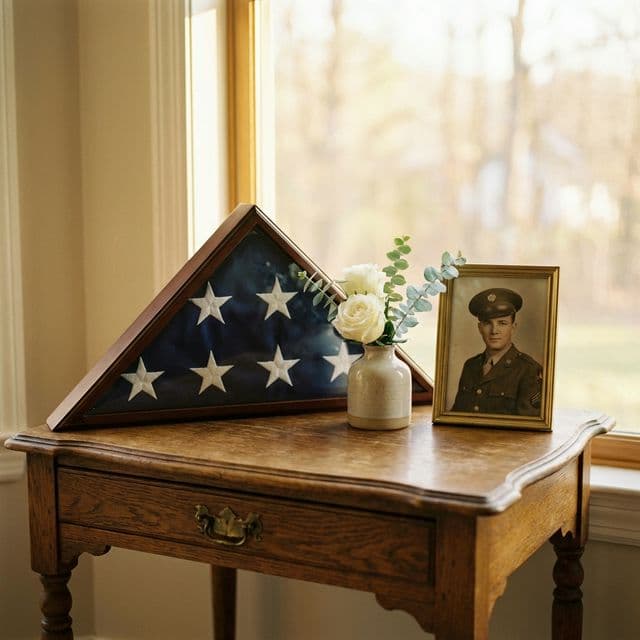
How to Honor a Veteran with a Meaningful Online Memorial
For many families, a veteran's headstone at a national cemetery captures only the basics - name, rank, dates, and branch of service. But the full story of their life, their sacrifice, and the person behind the uniform deserves more space than stone allows.
An online memorial page gives you that space. It's a permanent, shareable tribute where family, fellow service members, and friends can see photos, read their story, and leave messages of remembrance.
If you are also writing an obituary, see our guide to how to write a military obituary for rank formatting, service details, awards, and a fill-in template.
To honor a veteran online, create a memorial page that combines their service record — branch, rank, years served, awards — with personal photos and a biography written with family input. Add a guestbook so fellow veterans can leave stories the family may never have heard. You can have it live and shareable within an hour.
Why a Veteran Memorial Should Tell More Than the Basic Facts
Rank, branch, and dates of service matter - they mark the scope of their commitment. But a memorial that stops there leaves most of the person out.
Veterans carry their service into every part of their lives: how they raised their kids, how they showed up for their community, how they handled hard things. A memorial that captures only the uniform misses the father, the neighbor, the storyteller, the person their grandchildren actually knew.
A veteran memorial page gives you room to include both - the facts of their service and the fullness of who they were.
What to Include on a Veteran's Online Memorial Page
Service Branch, Rank, and Record
Start with the facts of their military career:
- Branch of service (Army, Navy, Air Force, Marines, Coast Guard, Space Force)
- Rank at discharge or retirement
- Years of service and periods of enlistment
- Deployments and duty stations
- Awards, medals, and commendations
- Unit affiliations and military occupational specialty
Civilian Life, Family, and Personality
Beyond service, write about who they were as a person. What did they do after the military? What were their hobbies? What did their grandchildren call them? What made them laugh? These details make the memorial feel alive and personal - and they're often what family members most want to preserve.
A Full Biography
Use the memorial to tell their complete story, not just the service chapter. A good veteran biography typically covers:
- Early life and upbringing
- What led them to enlist or commission
- Military service: where they went, what they did, who they served with
- Life after service: career, family, community
- Values, legacy, and what people remember most
How to Write a Veteran Memorial Biography
A short, structured biography is more useful than a stream of memories. Consider working through these prompts with family:
- Where did they grow up and what was their life like before service?
- What branch did they serve in, and when did they enlist or commission?
- Where were they stationed or deployed? What do family members remember hearing about those years?
- What awards, commendations, or moments of service stood out?
- What did they do after the military - work, family, hobbies, community?
- What values did they carry from their service into the rest of their life?
- What do you most want people to remember about them?
You don't need to answer every question. Even two or three well-written paragraphs create a memorial biography that feels meaningful.
Photo Ideas for a Veteran Memorial Page
A memorial page with photos tells a story that words alone can't. For a veteran's memorial, include a mix of military and civilian images:
- Official service portraits and boot camp photos
- Candid photos from deployments, base life, or training
- Homecoming photos and moments with fellow service members
- Family photos spanning decades - not just the service years
- Photos of medals, uniforms, unit patches, or service memorabilia
- Letters, certificates, discharge papers, or flags
If photos are scattered across family members, creating the memorial can be a good reason to gather them into one place.
How Fellow Veterans and Friends Can Add Memories
One of the most valuable things an online memorial offers is the ability for others to contribute. Fellow service members often have stories the family has never heard - about what their loved one was like overseas, about small acts of courage or kindness, about the person they knew before the family did.
A guestbook gives those people a place to leave those stories. See what to write in a memorial guestbook for examples of the kinds of messages that mean the most.
Invite fellow veterans by sharing the memorial link with:
- Unit associations and veteran reunion groups
- VFW and American Legion posts they belonged to
- Military Facebook groups tied to their branch or unit
- Service friends you can reach through family connections
Ways to Share a Veteran's Memorial Page
Once the memorial is created, sharing it widely ensures more people can visit and contribute.
- Funeral programs - include the memorial link or a QR code so attendees can visit the page after the service
- Family announcements - share the link in the initial death notice or obituary
- Social media - share the memorial page on Facebook groups dedicated to their unit or branch
- Veteran groups - post in VFW chapters, American Legion posts, or unit association newsletters
- QR code on printed materials - add a QR code to a grave marker so visitors at the cemetery can find the full tribute — see our guide to QR codes for graves for weatherproofing tips and placement options
The QR code is especially useful for veterans buried at national cemeteries, where a headstone's physical space is limited. A small placard or attached card can link to everything the headstone can't hold.
How QuickMemorial Helps Preserve a Veteran's Story
QuickMemorial is built for exactly this - creating a permanent, shareable memorial that holds more than a headstone can.
With QuickMemorial you can:
- Enter service details, biography, and personal memories
- Upload photos from any era of their life
- Share a memorial link with family and military communities
- Download a printable QR code for funeral programs, grave displays, or memorial events
- Receive guestbook messages from visitors who want to share their own memories
The memorial is hosted permanently with a one-time payment - no subscriptions, no renewal fees. Start a free memorial page to see how it works, then upgrade if you need more photos or a printable QR code.
Funeral homes and hospices that create memorial pages on behalf of the families they serve can find dedicated setup tools at memorial pages for funeral homes.
A Lasting Tribute to Their Service and Life
A headstone marks where a veteran rests. An online memorial tells the world who they were, what they did, and why they mattered. It's a tribute that reaches beyond the cemetery gate - to distant family, old friends, and future generations who will never meet them but can still know their story.
The service record is part of that story. So is everything else.
Frequently Asked Questions
What should I include on a veteran memorial page?
Include their branch, rank, years served, deployments, awards, photos, personal biography, family memories, and guestbook messages. The goal is to capture both the service record and the full person behind it.
How do you write a memorial for a veteran?
Start with their service details, then add personal stories, family life, values, accomplishments, and memories that show who they were beyond the uniform. Working through a set of structured prompts with family members is often the easiest way to gather the material.
Can I add military photos and medals to an online memorial?
Yes. Service portraits, medals, uniforms, letters, and family photos can all be added to a memorial page. Including a mix of military and civilian photos helps create a fuller tribute.
How can fellow veterans share memories?
Use a memorial guestbook so friends, service members, and relatives can leave messages, stories, and condolences. Sharing the memorial link with unit associations, VFW posts, and veteran Facebook groups makes it easy for more people to find and contribute.
Can a veteran memorial page be shared with family and military groups?
Yes. Share the memorial link through family messages, funeral programs, social media, veteran groups, or a QR code on printed materials or grave displays.
Is an online memorial appropriate for a veteran?
Yes. An online memorial can respectfully preserve their service, personal story, photos, and memories in one accessible place - open to family, fellow veterans, and future generations.
Create a Veteran Memorial Page
Honor their service and preserve their story with a memorial page that includes photos, service details, family memories, and guestbook messages.
QuickMemorial
Written by the QuickMemorial editorial team. We cover grief, memorials, and end-of-life planning to help families navigate loss with care. Learn about us.
Related Articles
How to Write a Military Obituary: Format, Examples, and Tips
A complete guide to writing a military obituary — how to format rank and branch, what service details to include, military-specific wording, and a fill-in template with examples.
Pet Memorial QR Code: How to Create One and Where to Use It
A pet memorial QR code links a physical tribute — a garden stone, urn, collar tag, or framed photo — to a full online memorial with photos and memories. Here's how to create one and the best places to use it.
What to Write in a Memorial Guestbook: 50 Meaningful Message Examples
Not sure what to write in a memorial guestbook? Here are 50 thoughtful examples, plus simple advice for writing a message that feels personal, respectful, and sincere.